New crossing point or old desire line? Reading foot traffic in VHR imagery
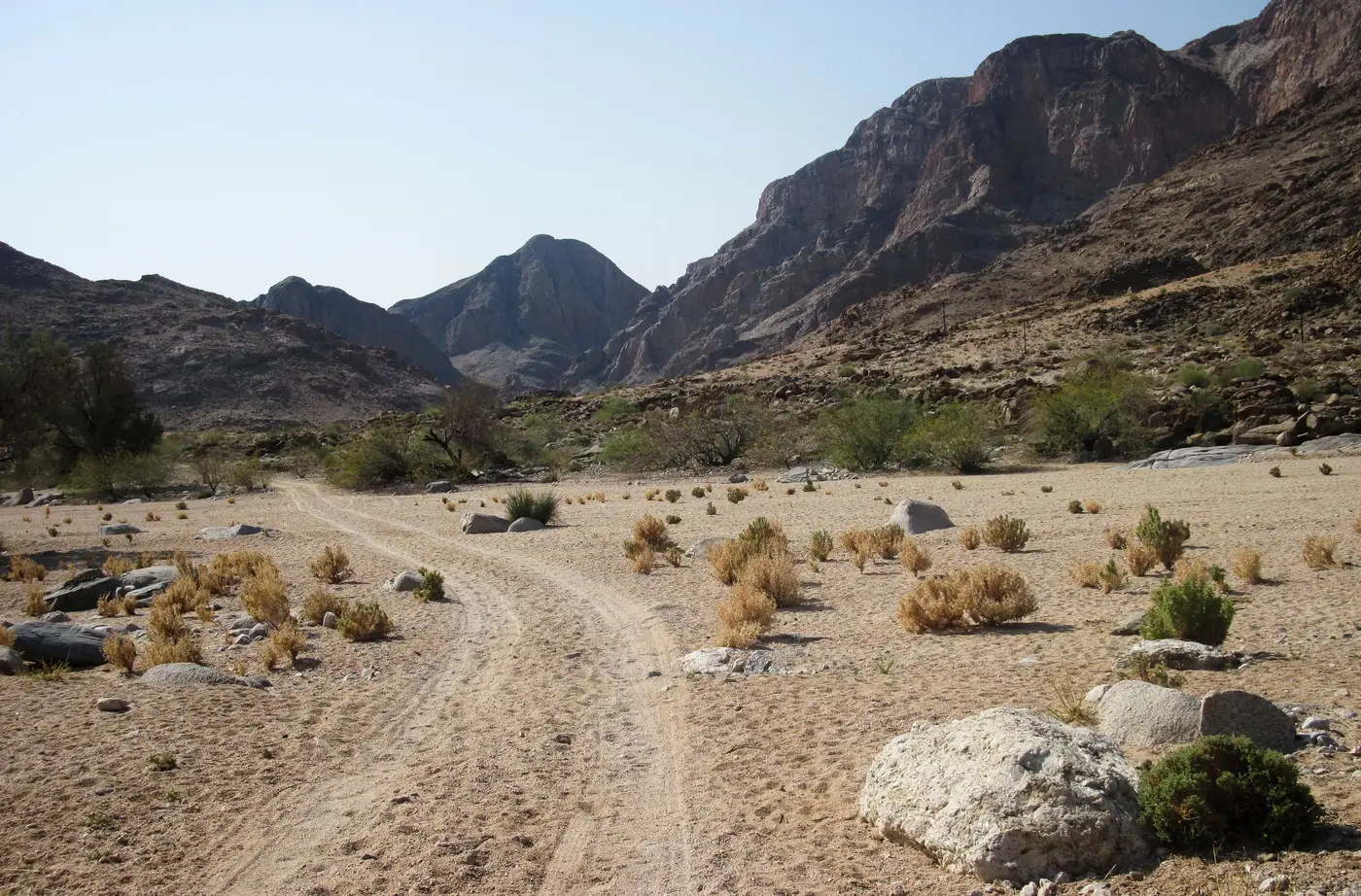
A watch desk gets this wrong in both directions. Flag every worn patch of ground as a new crossing and you drown the shift log in noise. Wave off a real breach because "there's always been a trail there" and you miss the thing you're watching for. The difference usually comes down to a handful of things you can read straight off the imagery, if you know where to look.
Desire line vs. crossing point: what's different
A desire line is old behavior. It's the path people have worn into the ground over months or years because it's the shortest route between two points, regardless of what a fence or a sign says. It has soft edges, it's lighter in tone than bare disturbed soil because it's compacted and vegetated at the margins, and it tends to curve the way feet walk, cutting corners, avoiding wet ground, swinging wide around obstacles that aren't there anymore. It shows up the same way in this month's tile as it did six months back. That consistency is the tell.
A crossing point is an event, or the trace of one. Look for a straight or near-straight line that doesn't match the terrain logic of a desire line. Fresh crossings cut directly at a fence or barrier rather than paralleling it. The soil disturbance is sharper-edged and darker or lighter than the surrounding ground depending on moisture, because it hasn't had a season to revegetate. If there's a fence in frame, check the line itself before you check the ground: a new gap, a pushed-down section, or cut mesh will show as a discontinuity in the fence's own shadow line, which is often more visible than the disturbance on either side of it.
Five things to check before you call it
Edge sharpness. Old trails blur into the surrounding ground cover. New disturbance has a crisp boundary, at least for the first few imaging cycles after it happens.
Vegetation state. Compare the path to the ground immediately next to it. A desire line has the same plant community, just shorter and thinner. A fresh crossing often shows bare soil or crushed vegetation that hasn't had time to recover its color.
Geometry relative to the barrier. Established footpaths tend to run parallel to fences and roads, feeding into known gates or low points. A track that approaches a fence line head-on and stops is worth a second look, especially if it picks up again on the other side at a slightly different bearing. That offset is often where someone regrouped after getting through.
Repeat visibility across dates. This is the single most reliable check and the reason a one-off tile rarely settles the question. Pull the same tile from a prior pass. If the line was there last month, it's background. If it wasn't, something happened between the two acquisitions.
Staging signs nearby. New crossing points often come with company: flattened grass where someone sat or waited, tire tracks on the near side, a gap in roadside brush that wasn't there before. A lone trail with none of that context is more likely just a trail.
Where this breaks down for a one-person desk
None of this is hard to do for one segment on one day. It gets hard when you're carrying twenty kilometers of line and the honest way to check "was this here last month" is to pull yesterday's tile and today's tile and eyeball them side by side, tile by tile, for every stretch that looks even slightly different. Most analysts don't have time to do that daily, so the comparison either doesn't happen or it happens in batches, which means a crossing that opened two weeks ago gets logged as "noticed today."
The real constraint is time. You know what a fresh crossing looks like. You just don't get the hours to run that yesterday-today comparison across the whole line, every day. Border Monitoring runs that comparison for you and surfaces what changed since the last pass, so the question on your desk isn't "did I miss something in the archive" but "what's new since yesterday."
If you're tired of re-deriving this from scratch every shift, it might be worth putting the daily diff on autopilot instead.