How to tell a cut fence from storm damage in VHR imagery
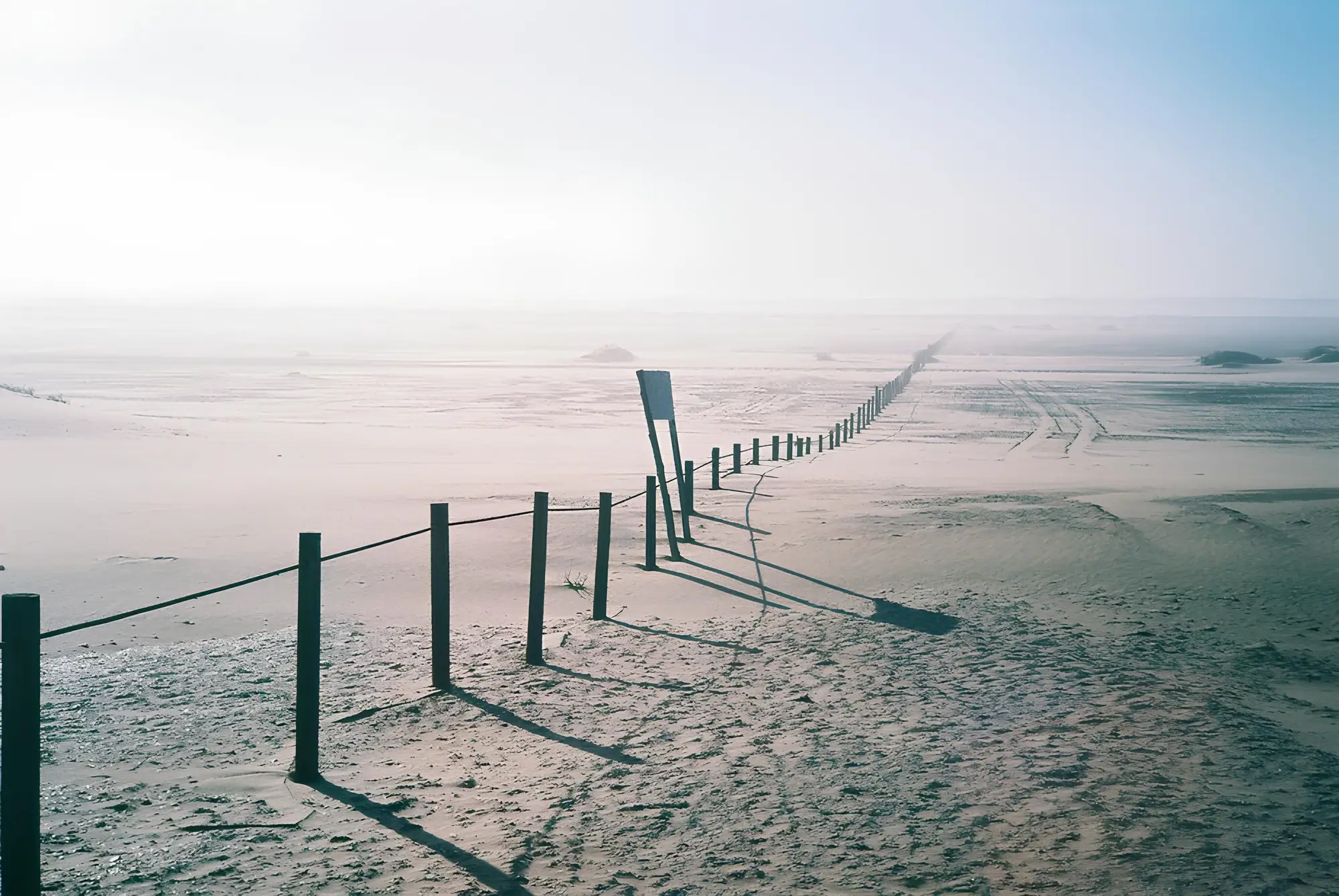
A gap in the fence line looks the same for about half a second. Then you start reading the pattern around it, and storm damage and a cut section stop looking anything alike.
This matters more than it should, because the two get confused constantly on a quick pass through tiles. An analyst scanning a long boundary segment at the end of a shift will flag a gap, note it as "fence down," and move on. Sometimes that's wind. Sometimes it's someone with bolt cutters who came back three nights running. The difference changes what you do next, so it's worth the extra ninety seconds per gap.
What weather damage actually looks like
Storm and wind damage follows the terrain and the weather, not the road network. A few things to check:
- The break lines up with a wind corridor or drainage line, not with a track or trail on either side.
- Posts are leaning or snapped at ground level, often several in a row, tilted the same direction. Wind flattens and pushes fencing rather than slicing through it cleanly.
- Debris collects downwind in loose, scattered patches, without the pile-up or drag marks you'd see near a deliberate exit point. Tumbleweed, loose brush, and torn mesh tend to collect against whatever's still standing nearby.
- No track approaches the gap from either side. Nobody walked up to admire storm damage.
- The timing matches a known weather event. Cross-reference against a storm date if you have one. A gap that appears the morning after a wind advisory is doing exactly what wind damage does.
Flood and runoff damage shows differently again: washed-out footings, fence sections lying flat in the direction of water flow, sometimes buried in sediment rather than torn.
What a cut or pushed-through breach looks like
A deliberate breach has a different signature almost every time, because people don't move like weather.
- A track leads to the gap and away from it, on at least one side, usually both. Foot traffic, vehicle tracks, or a trampled path through brush. This is the single strongest tell. Weather doesn't leave an approach.
- The gap is narrow and clean relative to the surrounding fence, sometimes just a single panel or a vertical cut in mesh, rather than multiple posts down.
- Fencing material is pulled or rolled to one side. Someone who cuts a fence usually folds it back rather than letting it drag.
- There's often a staging footprint nearby, a flattened patch, a vehicle pull-off, tire marks that don't belong to any maintenance road. Check the frame from a day or two before the breach appears. If a vehicle shows up and sits in the same spot more than once before the gap opens, that's a planning pattern, not weather.
- The location correlates with low ground visibility or dead ground, a wash, a stand of brush, a bend that breaks sightline. Weather damages fence wherever the fence happens to be weak. People pick the spot.
One more tell that trips people up: repair activity. A storm-damaged section that's been fixed and then re-breached in nearly the same spot within days is very rarely a second storm. Check the repair date against the new break.
Reading this from a single tile versus reading it over time
A single tile only shows you the gap. What it doesn't show is whether that gap is new since yesterday, whether a track to it existed the week before, or whether the same spot has been patched and re-opened twice this month. That's the part that actually separates a maintenance ticket from an incident report, and it's hard to catch by eyeballing archive tiles segment by segment when you're also watching the rest of the line.
This is the gap a standing daily watch on a boundary line is built to close: a feed that flags what changed overnight along a defined line, so a new gap, a new track to it, or a new staging footprint shows up as a dated item instead of something you have to notice yourself on a slow afternoon.
If you're the one deciding whether a gap gets a maintenance call or a patrol response, it helps to see it against yesterday's tile before you have to make that call. That's the comparison worth building into the watch, not just the single frame of the breach itself.